
The global economy is rapidly shifting toward digital-first systems, and the Ftasiaeconomy tech trend represents this transformation. It highlights how emerging technologies are reshaping industries, trade, and innovation worldwide. Over the next decade, digital adoption will become a key driver of economic growth. Technology is improving productivity by automating tasks and enabling faster decision-making through data. It shows how economies are integrating AI, cloud computing, and automation into core systems. It reflects the movement toward smarter, technology-driven economic structures.
Artificial Intelligence as the Core Growth Engine
Artificial Intelligence is becoming the most important driver of innovation in the modern economy. It powers automation, analytics, and intelligent decision-making across industries. In the Ftasiaeconomy tech trend, AI is a central force of transformation.
AI in automation, decision-making, and data analysis
AI automates repetitive tasks, saving time and reducing human error in business operations. It analyzes large datasets to help companies make faster and smarter decisions. Industries like healthcare and finance are heavily using AI for accuracy and efficiency.
The rise of generative AI and intelligent systems
Generative AI can create text, images, code, and even business solutions with minimal human input. These systems are becoming more advanced and widely used across digital platforms. They are changing how content creation and innovation work.
Impact of AI on jobs and productivity
AI increases productivity by handling repetitive and time-consuming work. However, it is also reshaping job markets by reducing some roles and creating new technical careers. Skills in AI, data science, and machine learning are becoming highly valuable.
Blockchain and the Decentralized Economy
Blockchain technology is redefining trust in digital systems by removing centralized control. It is a key part of the Ftasiaeconomy tech trend due to its transparency and security features. This technology is reshaping finance, identity, and digital ownership.
How blockchain improves transparency and security
Blockchain stores data in a secure, tamper-proof system that cannot be easily altered. This increases trust in financial and business transactions. It also reduces fraud and improves accountability.
Growth of decentralized finance (DeFi)
DeFi allows people to access financial services without traditional banks or intermediaries. It provides lending, borrowing, and trading services directly on blockchain platforms. This makes finance more accessible and global.
Digital identity and Web3 evolution
Blockchain supports digital identity systems that give users control over their personal data. Web3 is evolving into a decentralized internet where users own their information. This shift increases privacy and digital independence.
Cloud Computing and Edge Computing Expansion
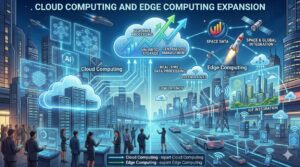
Cloud and edge technologies are essential for modern digital infrastructure. They support scalability, speed, and real-time data processing in the Ftasiaeconomy tech trend. Businesses rely on them for digital transformation.
Why businesses are moving to cloud-first infrastructure
Cloud computing allows businesses to store and access data from anywhere in the world. It reduces infrastructure costs and improves flexibility. This makes operations more efficient and scalable.
Role of edge computing in real-time data processing
Edge computing processes data closer to where it is generated instead of sending it to central servers. This reduces delay and improves real-time decision-making. It is important for IoT devices and smart systems.
Hybrid cloud models in modern enterprises
Many companies now use a mix of private and public cloud systems. This hybrid approach balances security, cost, and performance. It allows businesses to optimize their digital infrastructure.
5G, IoT, and Hyperconnectivity
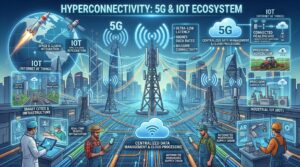
Connectivity technologies are driving the next phase of digital evolution in the Ftasiaeconomy tech trend. They enable faster communication and smarter systems across industries. This is creating a fully connected digital ecosystem.
How 5G enables faster communication and smart systems
5G provides ultra-fast internet speeds with very low latency. It enables technologies like autonomous vehicles and real-time remote control systems. This improves efficiency across multiple sectors.
Internet of Things (IoT) in smart cities and industries
IoT connects devices like sensors, machines, and appliances to share data. This helps create smart cities with better traffic, energy, and resource management. Industries use IoT for automation and monitoring.
Future shift toward 6G and ultra-low latency networks
Research into 6G aims to provide even faster and more intelligent connectivity. It will support advanced technologies like immersive virtual environments. This will further expand digital communication systems.
Automation, Robotics, and Smart Manufacturing
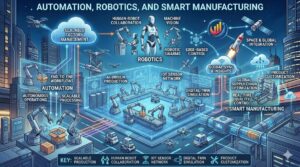
Automation is transforming production systems and business operations worldwide. It is a major part of the Ftasiaeconomy tech trend as industries become more efficient. Robotics and AI are leading this transformation.
Rise of industrial robotics in production systems
Robots are increasingly used in factories for tasks like assembly and packaging. They improve speed, precision, and workplace safety. This reduces human labor in repetitive industrial tasks.
AI-powered automation in business operations
Businesses use AI tools to automate customer service, logistics, and data management. This reduces manual effort and improves operational efficiency. It also helps companies scale faster.
Job transformation in the automated economy
Automation is changing job structures across industries. While some jobs are replaced, new opportunities are created in tech and engineering fields. Workers need to develop digital and analytical skills.
Cybersecurity in the Digital-First Era
As digital systems grow, cybersecurity becomes more important than ever. It plays a critical role in the Ftasiaeconomy tech trend. Protecting data is now a top global priority.
Increasing cyber threats in a connected world
Cyberattacks are rising due to increased online activity and data usage. Hackers target businesses, governments, and individuals for sensitive information. This makes cybersecurity essential.
Importance of data protection and encryption
Encryption protects data by converting it into secure code that cannot be easily accessed. Businesses use it to protect financial and personal information. It helps build trust in digital systems.
AI-driven cybersecurity solutions
AI helps detect cyber threats in real time by analyzing system behavior. It can respond quickly to prevent data breaches. This makes cybersecurity more proactive and effective.
Green Technology and Sustainable Innovation
Sustainability is becoming a key focus in technological development. It is an important part of the Ftasiaeconomy tech trend. Green innovation supports long-term environmental balance.
Role of renewable energy in tech infrastructure
Tech companies are using solar and wind energy to power data centers. This reduces dependency on fossil fuels. It also lowers carbon emissions significantly.
Eco-friendly digital transformation strategies
Businesses are adopting energy-efficient systems and reducing electronic waste. Sustainable IT practices are becoming more common. This helps reduce environmental impact.
Carbon-neutral goals in tech industries
Many global companies are committing to carbon neutrality. They aim to balance emissions through sustainable practices. This is becoming a long-term industry standard.
Future Outlook – What Will Shape the Next Decade
The next decade will be shaped by rapid technological convergence. The Ftasiaeconomy tech trend will continue evolving with smarter systems and global integration. Innovation will drive every major industry.
Convergence of AI, blockchain, and IoT
These technologies will combine to create intelligent and automated ecosystems. They will improve efficiency, security, and connectivity. This will reshape how industries operate.
Rise of intelligent economies and digital nations
Countries will rely heavily on digital infrastructure for growth. Smart governance and digital economies will become more common. This will increase global competition.
Skills and industries that will dominate the future
Skills in AI, cybersecurity, cloud computing, and data science will be in high demand. Industries like fintech, robotics, and green tech will grow rapidly. Adaptability will be key to success.
Final Thoughts
The Ftasiaeconomy tech trend represents a powerful shift toward a fully digital, intelligent, and interconnected global economy. Technologies like AI, blockchain, cloud computing, and automation are not just trends—they are shaping the foundation of the next decade. Businesses, governments, and individuals who adapt early to these changes will be best positioned for long-term success in this evolving digital world.